wecare stroke

Stroke Awareness

Home / Stroke Awareness
STROKE AWARENESS

Recognize Stroke Early
Save a Life

Stroke is a medical emergency. Acting quickly can reduce brain damage and improve recovery chances significantly. This campaign aims to help you recognize the warning signs, understand risk factors, and know exactly what to do in the critical first minutes.

1 in 4

Adults over 25 will have a stroke in their lifetime

Every 40 sec

Someone has a stroke

80%

Of strokes are preventable

Minutes Matter

Every minute untreated, ~1.9M brain cells die
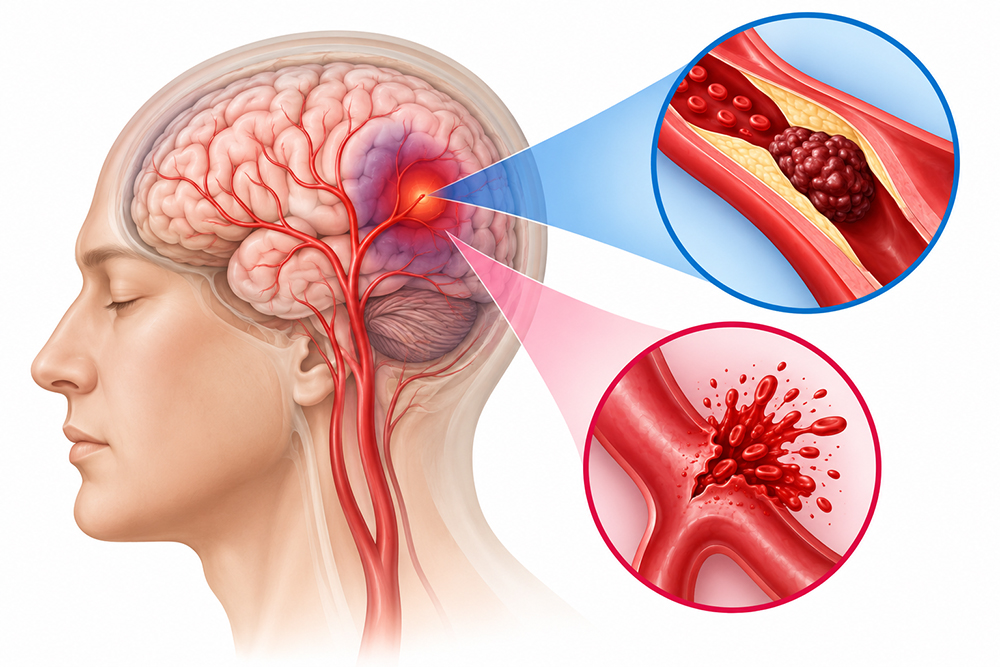
What happens during a stroke

What Happens During a Stroke?

A stroke occurs when blood flow to the brain is blocked or a vessel ruptures. Brain cells begin to die within minutes due to lack of oxygen.

  • Ischemic Stroke — caused by a blocked artery
  • Hemorrhagic Stroke — caused by bleeding in the brain
  • TIA (Mini Stroke) — a temporary blockage, a serious warning sign

Causes & Risk Factors

Some risk factors can be managed, others cannot — knowing both helps you act early.

Controllable

  • High blood pressure
  • Smoking
  • Diabetes
  • High cholesterol
  • Obesity & inactivity
  • Excess alcohol

Uncontrollable

  • Age (risk increases after 55)
  • Family history of stroke
  • Prior stroke or TIA
  • Gender
  • Genetic factors

Recognize Stroke FAST

F

Face Drooping
Uneven smile

A

Arm Weakness
Unable to lift arm

S

Speech Problem
Slurred speech

T

Time to Act
Call immediately

Additional Warning Signs

  • Sudden numbness or weakness, especially on one side of the body
  • Sudden confusion, trouble speaking, or understanding speech
  • Sudden trouble seeing in one or both eyes
  • Sudden trouble walking, dizziness, loss of balance, or lack of coordination
  • Sudden severe headache with no known cause

Immediate Response to Stroke

Emergency Actions

  • Call emergency services immediately — do not wait to see if symptoms pass
  • Note the exact time symptoms started
  • Keep the person calm, safe, and lying down with head slightly raised
  • Do not give food, water, or medication
  • Loosen tight clothing and monitor breathing

Hospital Treatment

  • Diagnostic imaging: CT scan and MRI to identify stroke type
  • tPA (clot-busting medication) for eligible ischemic strokes
  • Surgical intervention for hemorrhagic strokes when required
  • Continuous monitoring in a stroke unit or ICU

Prevention & Risk Reduction

Lifestyle Changes

  • Eat a balanced, low-sodium, low-fat diet
  • Engage in regular physical activity (150 min/week recommended)
  • Quit smoking — seek support programs if needed
  • Limit alcohol consumption

Medical Management

  • Manage blood pressure, diabetes, and cholesterol
  • Take prescribed prevention medications consistently
  • Schedule regular medical check-ups and screenings

Long-Term Effects & Rehabilitation

Physical Rehabilitation

Physical therapy plays a key role in recovery.

  • Strength-building exercises
  • Balance and coordination training
  • Gait and mobility retraining

Cognitive & Emotional Support

  • Cognitive rehab for memory, attention, and problem-solving
  • Counseling and mental health support
  • Peer support groups for patients and families

Daily Living Adaptations

  • Home safety and accessibility modifications
  • Assistive devices (walkers, grab bars, etc.)
  • Occupational therapy for independent living

Every Second Counts. Act FAST.

If you notice stroke symptoms, immediate action can save lives and reduce disability.